The question “Can you get pregnant on your period?” is one of the most frequently searched topics in reproductive health. Despite being commonly discussed, it is also widely misunderstood. Many people assume that menstruation automatically prevents pregnancy, leading to risky assumptions about fertility and contraception. In reality, human reproduction is influenced by multiple biological factors, and the answer is not as simple as a yes or no.
This is explains the medical facts behind pregnancy during menstruation using a clear, descriptive, and evidence-based approach. By understanding how the menstrual cycle works, you can make informed decisions that protect your health and plans.
Understanding the Menstrual Cycle and Fertility
To answer whether pregnancy is possible during a period, it is important to understand how the menstrual cycle functions. A typical menstrual cycle lasts about 28 days, though cycles ranging from 21 to 35 days are considered normal.
Ovulation—the release of an egg from the ovary—usually occurs around day 14 of a 28-day cycle. Pregnancy happens when sperm fertilizes an egg, and the fertilized egg implants in the uterus. Since menstruation occurs when no pregnancy has taken place, many believe fertility is impossible during this time.
However, this assumption does not fully reflect biological reality.
Can You Get Pregnant on Your Period?
Yes, it is possible to get pregnant on your period, although the likelihood is relatively low compared to other times in the cycle.
The main reason lies in sperm survival and cycle variation. Sperm can live inside the female reproductive tract for up to five days. If you have intercourse toward the end of your period and ovulate shortly afterward, sperm may still be viable when the egg is released.
This risk is especially relevant for individuals who:
- Have short menstrual cycles
- Experience irregular periods
- Ovulate earlier than expected
In these cases, ovulation may occur soon after menstruation ends, making pregnancy biologically possible even if intercourse happens during a period.
Why the Risk Is Often Underestimated
The belief that menstruation is a “safe period” often leads to unprotected intercourse. From a medical perspective, this belief is risky because menstrual cycles are not always predictable. Stress, illness, travel, hormonal changes, and age can all affect ovulation timing.
Additionally, light bleeding or spotting can sometimes be mistaken for a period. Ovulation bleeding or hormonal spotting may occur near the fertile window, increasing the chance of unintended pregnancy if contraception is not used.
Therefore, relying solely on menstruation as a form of birth control is not considered medically reliable.
Medical Perspective and Contraception
Healthcare professionals consistently emphasize that no day of the menstrual cycle is completely risk-free when it comes to pregnancy. While the probability may be lower during menstruation, it is not zero.
For those who wish to avoid pregnancy, using contraception consistently is strongly recommended. Barrier methods, hormonal birth control, or medically approved fertility tracking methods provide far greater protection than cycle assumptions alone.
From an evidence-based standpoint, informed awareness is more effective than myths when managing reproductive health.
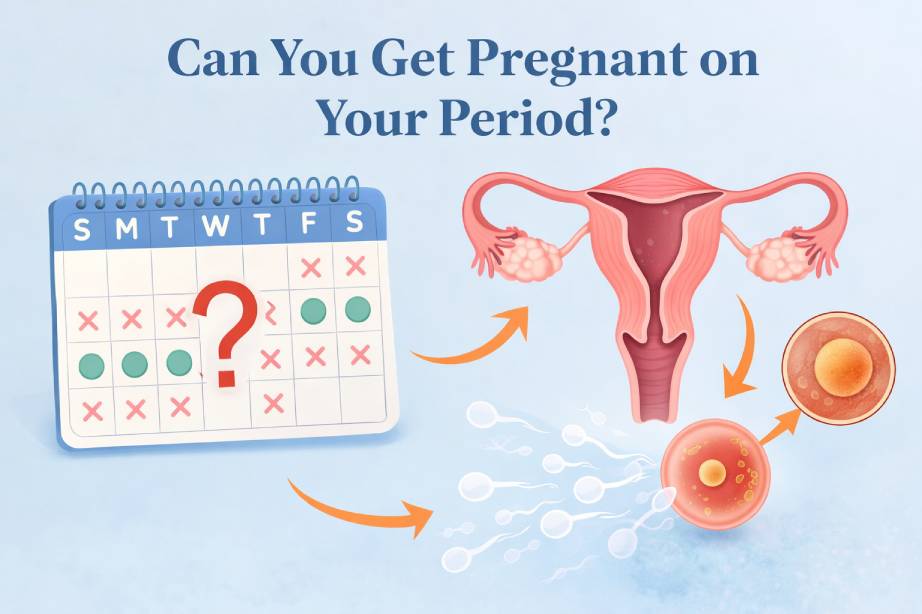
So, can you get pregnant on your period? The medically accurate answer is yes, it is possible, though uncommon. Biological variations, sperm longevity, and unpredictable ovulation make pregnancy during or shortly after menstruation a real possibility.
Understanding your body, tracking your cycle carefully, and using appropriate contraception are essential steps for anyone seeking to prevent unintended pregnancy. Reliable information—not assumptions—remains the foundation of reproductive health decisions.
Frequently Asked Questions (FAQ)
1. Is it safe to have unprotected sex during your period?
Medically, unprotected sex always carries some risk of pregnancy and sexually transmitted infections. Menstruation does not guarantee protection against either.
2. Are you more likely to get pregnant right after your period ends?
Yes. The days immediately after menstruation can be fertile, especially for people with short or irregular cycles, due to early ovulation and sperm survival.
3. Can stress or hormonal changes increase pregnancy risk during a period?
Indirectly, yes. Stress and hormonal fluctuations can shift ovulation timing, making it harder to predict fertile days and increasing the chance of pregnancy.
This article is intended for educational purposes only and does not replace professional medical advice. Always consult a qualified healthcare provider for personal health concerns.