Missing a period can feel like a whisper before a life-changing announcement. At four weeks pregnant, everything is still incredibly small—almost microscopic—yet your body may already be shifting in subtle but meaningful ways. Hormones are rising, cells are multiplying, and your system is adapting faster than you might realize. Even if there’s no visible baby bump, the internal transformation has begun.
For many women, this is the stage when curiosity turns into cautious excitement. Understanding 4 weeks pregnant symptoms can help you feel more prepared, grounded, and confident about what’s happening inside your body.
Early 4 Weeks Pregnant Symptoms You May Notice
At four weeks pregnant, the fertilized egg has implanted into the uterine lining. This triggers the production of human chorionic gonadotropin (hCG), the hormone detected by pregnancy tests. Rising hCG levels are largely responsible for the early symptoms many women experience.
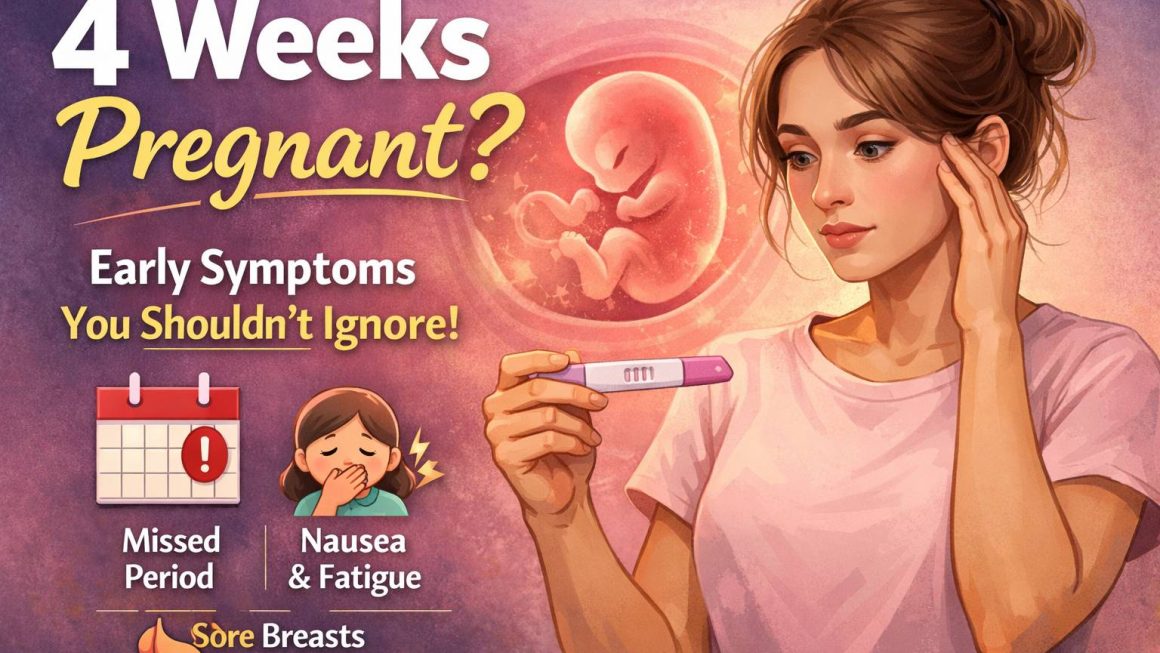
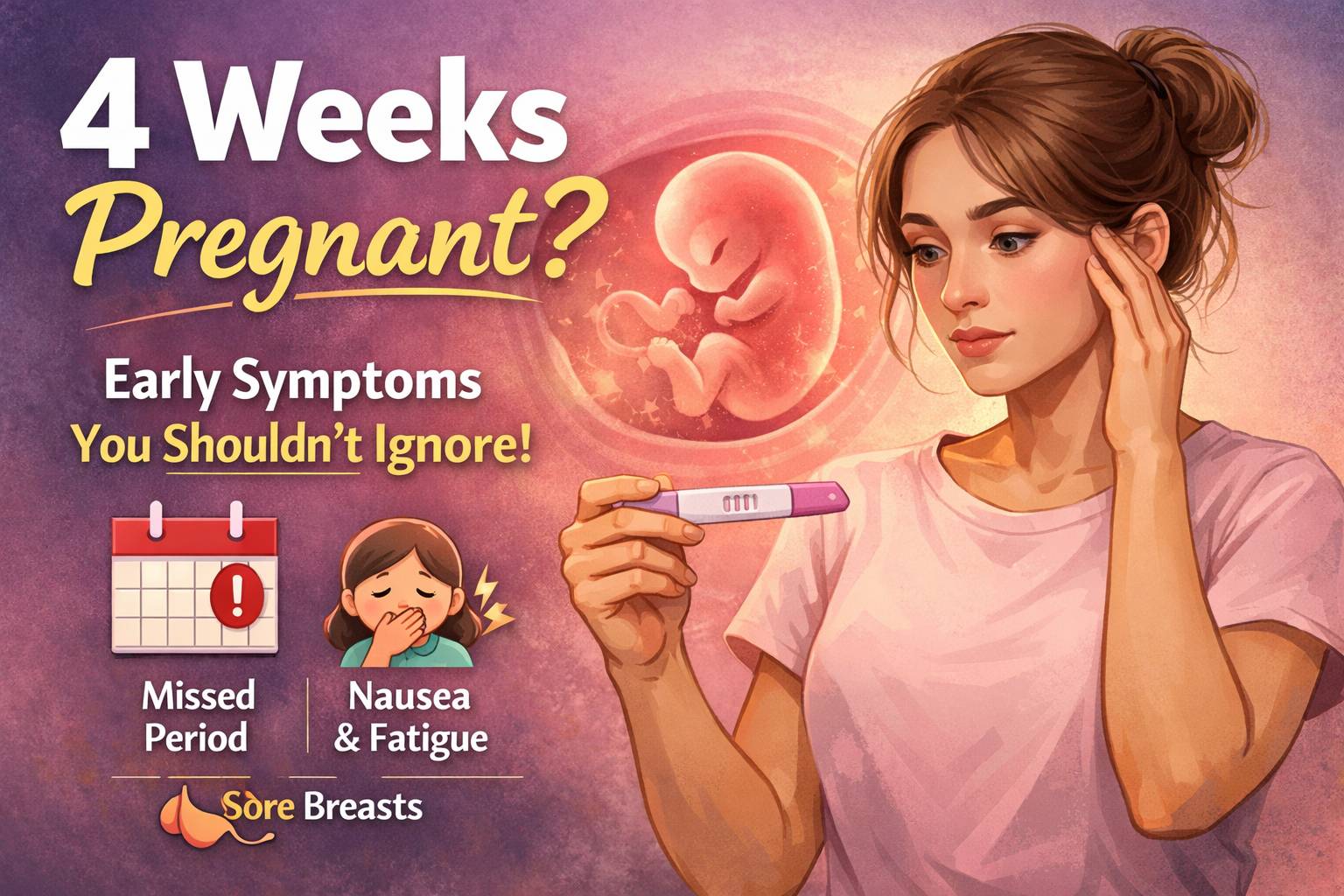
One of the earliest and most common signs is a missed period. While this may seem obvious, it remains the most reliable initial indicator for women with regular cycles. Shortly after, you might begin to feel mild cramping. These cramps are often lighter than menstrual cramps and are related to implantation and uterine expansion. Some women also notice light spotting, commonly called implantation bleeding, which is usually pink or brown rather than bright red.
Breast tenderness is another frequent symptom. Hormonal shifts increase blood flow and prepare the body for future milk production, making breasts feel fuller, sensitive, or slightly sore. Fatigue can also appear suddenly. Progesterone levels rise significantly at this stage, and this hormone naturally makes you feel sleepy. If you find yourself unusually tired despite adequate rest, your body may be conserving energy for early development.
Nausea can begin as early as week four, although it’s more common in weeks five and six. For some, it shows up subtly as food aversions or a heightened sense of smell. Foods you once enjoyed may suddenly seem unappealing, and everyday scents can feel overwhelming.
4 Weeks Pregnant Symptoms Before Missed Period
Some women notice changes even before realizing they’ve missed a cycle. Early pregnancy can bring mood swings caused by fluctuating hormone levels. You may feel more emotional, irritable, or sensitive than usual. These emotional shifts are biological, not psychological weakness.
Frequent urination can also start early. Increased blood flow to the pelvic area and hormonal changes cause the kidneys to process more fluid, leading to more bathroom trips. Although it may seem surprising this early, it’s a normal physiological response.
Bloating is another subtle but real symptom. Progesterone slows down digestion, which can cause gas and abdominal fullness similar to premenstrual symptoms. Because these sensations closely mimic PMS, many women initially dismiss them.
It’s important to understand that not everyone experiences noticeable symptoms at four weeks. Some women feel completely normal. The absence of symptoms does not indicate a problem. Early pregnancy varies widely from person to person, and even from one pregnancy to another in the same woman.
What Happens Inside Your Body at 4 Weeks Pregnant
While symptoms may still be mild, internal development is progressing rapidly. At four weeks, the embryo is about the size of a poppy seed. Cells are dividing and organizing into structures that will eventually form organs and body systems. The placenta is beginning to develop, acting as a support system for nutrient and oxygen exchange.
Hormones are orchestrating everything. hCG supports the corpus luteum so progesterone continues to be produced. Progesterone maintains the uterine lining and prevents menstruation. Estrogen levels are also rising, supporting uterine growth and increased blood flow.
Because hormonal changes are intense, it’s normal to feel “different” even if you can’t quite describe why. Some women report a vague sense that something has shifted in their bodies. That intuition often aligns with measurable hormonal changes occurring beneath the surface.
Emotional and Physical Adjustment in Week Four
Beyond physical symptoms, emotional awareness often increases during this stage. The realization of pregnancy—whether planned or unexpected—can bring excitement, anxiety, or a mix of both. Hormones amplify these feelings, but they are also rooted in the significance of the moment.
Physically, your body is already adapting to support long-term growth. Blood volume will gradually increase over the coming weeks. Your metabolism begins adjusting to meet higher energy demands. Even if you feel normal externally, your body is working continuously behind the scenes.
At this point, small lifestyle adjustments matter. Starting or continuing prenatal vitamins with folic acid is strongly recommended to support neural tube development. Avoiding alcohol and smoking becomes especially important, as critical structures are forming now.
It is also wise to schedule a prenatal appointment, even if it will occur later. Many providers plan the first visit around eight weeks, but confirming pregnancy and discussing early care can provide reassurance.
When to Take a Pregnancy Test
Because hCG levels begin rising after implantation, most home pregnancy tests can detect pregnancy around the time of a missed period. Testing too early may result in a false negative, not because you aren’t pregnant, but because hormone levels aren’t high enough yet.
If you suspect pregnancy and receive a negative result, waiting a few days before testing again is reasonable. Hormone levels double approximately every 48 to 72 hours in early pregnancy. Timing can make a significant difference in accuracy.
FAQ About 4 Weeks Pregnant Symptoms
Is cramping normal at 4 weeks pregnant?
Yes, mild cramping at four weeks pregnant is generally considered normal. These sensations often occur because the embryo has implanted into the uterine lining and the uterus is beginning to expand slightly. The cramps are typically lighter and shorter than menstrual cramps. However, if pain becomes severe, persistent, or is accompanied by heavy bleeding, medical evaluation is important to rule out complications. Listening to your body and noting changes in intensity or pattern can help determine whether symptoms remain within the expected range.
Can you feel pregnant at 4 weeks, or is it too early?
It is absolutely possible to feel pregnant at four weeks, although experiences vary widely. Some women report fatigue, breast tenderness, bloating, or mood shifts very early. Others feel no noticeable changes at all. Hormone levels are rising quickly during this time, and those shifts can trigger symptoms even before a positive test appears. The absence of strong symptoms does not mean the pregnancy is not progressing normally. Each body responds uniquely to hormonal changes, making comparisons between individuals unreliable.
Is light spotting at 4 weeks pregnant a cause for concern?
Light spotting can be normal at this stage and is often related to implantation bleeding. This type of spotting tends to be light pink or brown and lasts only a short time. It is usually much lighter than a menstrual period. However, bright red bleeding, heavy flow, or bleeding accompanied by sharp pain should be evaluated by a healthcare provider. Monitoring the color, duration, and associated symptoms helps determine whether spotting fits typical early pregnancy patterns or requires medical attention.
A Quiet but Powerful Beginning
Four weeks pregnant may feel subtle, but it represents a profound biological milestone. Even without dramatic symptoms, the body is carefully building the foundation for new life. Paying attention to early signs can bring reassurance and clarity during this transitional moment.
Every pregnancy journey begins quietly, long before the world can see it. Understanding 4 weeks pregnant symptoms empowers you to respond with awareness, confidence, and thoughtful care as your body begins this remarkable process.