Reaching 10 weeks pregnant can bring a mixture of relief and lingering worry. For many pregnant people the term “10 weeks pregnant miscarriage risk” is a search they type late at night, hoping for reassurance. This article describes what research and clinical guidance tell us about risk at this stage, explains common causes, and argues for a measured, evidence-based approach to monitoring and care rather than panic or unnecessary interventions.
Core facts: what the numbers and experts report
Most pregnancy losses occur in the first trimester (the first 13 weeks). Clinically recognized early pregnancy loss is estimated to affect roughly 9–17% of pregnancies for women aged 20–30; that risk rises with maternal age (notably above age 35 and more so above 40). The overall pattern is clear: miscarriage probability is highest in the earliest weeks and declines after about week 12.
Several large clinical reviews and public-health resources agree that chromosomal abnormalities in the embryo/fetus are the most common cause of early miscarriage. Other contributors can include certain chronic maternal conditions, severe infections, and some environmental or lifestyle factors, but for the majority of early losses the proximate cause is a genetic problem that is not preventable. This scientific reality matters: it shifts the focus from blame to appropriate medical evaluation and support.
What “10 weeks” specifically means for risk
By 10 weeks many pregnancies are already past the period with the steepest decline in viability that occurs in the earliest weeks after implantation, but risk still exists because the first trimester is not complete. Empirical week-by-week charts indicate that the incremental risk at week 10 is substantially lower than in weeks 5–8, and continues to fall as the pregnancy progresses toward and beyond week 12. Nevertheless, individual risk depends on maternal age, medical history, and any symptoms (for example, heavy bleeding or severe cramping), so statistics are a starting point — not a personal prognosis.
Practical, evidence-based response (an argument for measured care)
Because most causes of early miscarriage are chromosomal and not modifiable, the best practical response at 10 weeks is measured: (1) continue routine prenatal care and any recommended labs or scans; (2) promptly report concerning symptoms (heavy bleeding, intense pain, fever) to a healthcare provider; and (3) address modifiable risk factors under clinical guidance — for example, optimizing chronic conditions (diabetes, thyroid disease), stopping tobacco and illicit substances, and following vaccination and food-safety advice. Overmedicalizing low-risk pregnancies (unnecessary tests or interventions) does not reduce miscarriage rates and can increase anxiety and cost. This evidence-based balance—vigilance without panic—provides the best pathway to both physical safety and emotional resilience.
Emotional and follow-up considerations
Fear about miscarriage is common and understandable. If loss occurs, compassionate medical care and clear explanations (including when chromosomal testing is offered) help many people make informed choices about next steps. If a pregnancy continues past 12 weeks with normal findings and a reassuring ultrasound, the overall risk of loss falls markedly — which is why many clinicians and expectant parents consider the completion of the first trimester an important milestone.
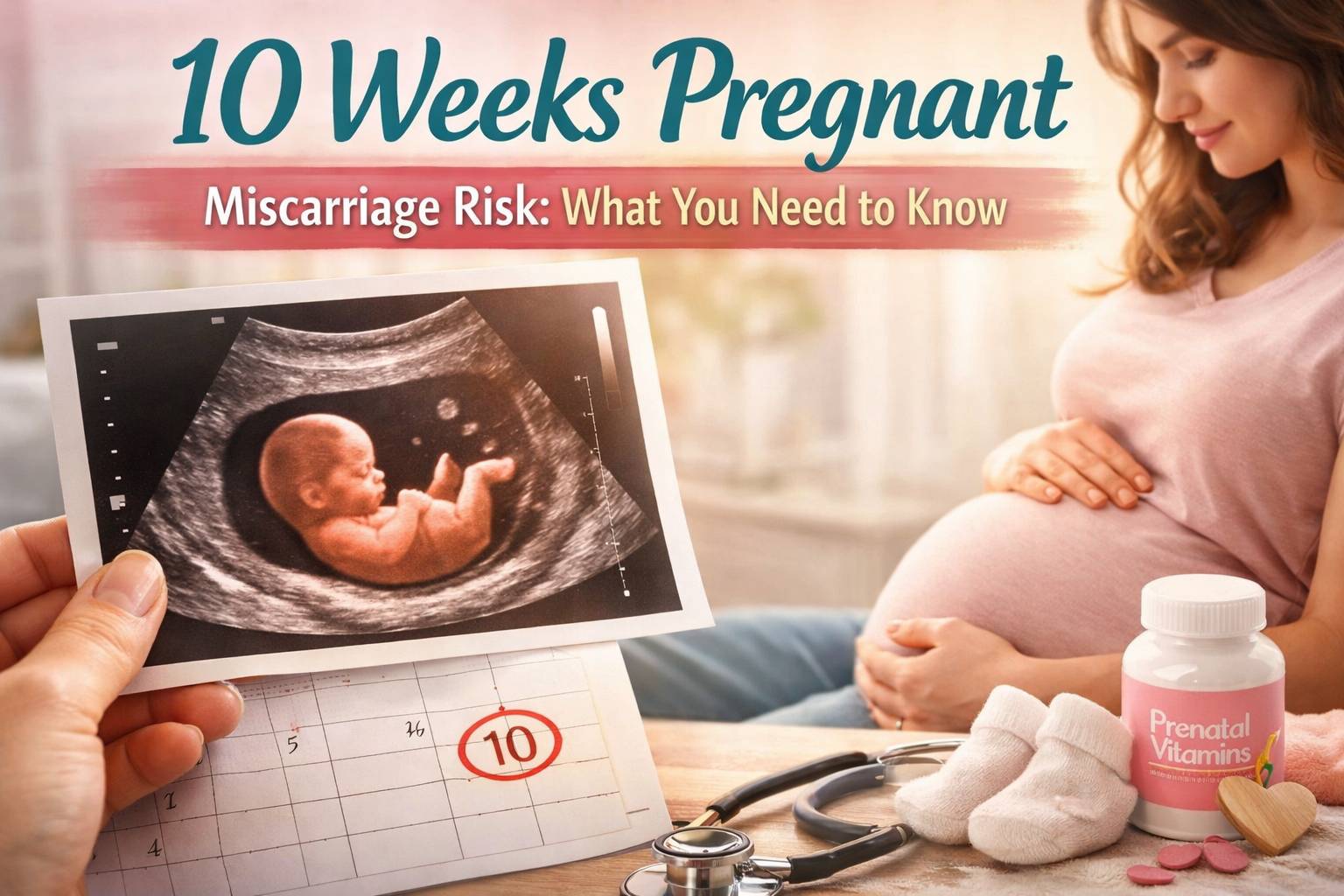
The phrase “10 weeks pregnant miscarriage risk” reflects an important concern. Current evidence shows that risk at 10 weeks is lower than very early pregnancy weeks but not zero; chromosomal abnormalities remain the most frequent cause, and maternal age and medical history shape individual risk. The reasoned, evidence-based approach is to maintain recommended prenatal care, report worrying symptoms promptly, address controllable health factors with your clinician, and seek emotional support when needed. Panic and misinformation do not improve outcomes — informed care and calm vigilance do.
FAQ (three current, concise answers)
1. What is the chance of miscarriage at 10 weeks?
Exact chance varies by individual factors (age, medical history). Population data show miscarriage risk declines by week 10 compared with earlier weeks, but a small residual risk remains until after week 12. For broad population estimates and authoritative guidance, see clinical sources such as the Mayo Clinic and ACOG.
2. Can I do anything at 10 weeks to reduce my risk?
Most early miscarriages are due to chromosomal issues that cannot be prevented. What helps is good prenatal care: manage chronic health problems, avoid tobacco and illicit drugs, follow food-safety guidance, and keep scheduled appointments. Discuss any specific concerns with your healthcare provider.
3. When should I call my doctor during week 10?
Contact your provider promptly for heavy vaginal bleeding, severe abdominal pain, fever, or passing tissue. Mild spotting can be common but should still be reported so clinicians can assess and advise.