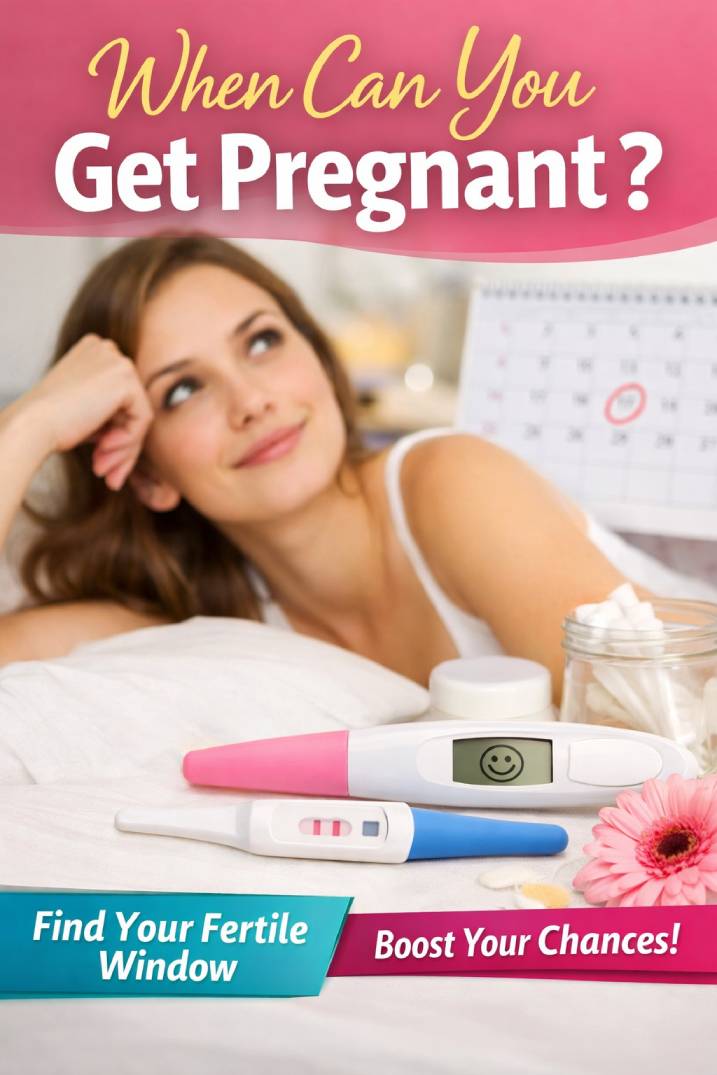
Understanding when can you get pregnant is one of the most common—and most misunderstood—questions about fertility. Some people think pregnancy can only happen on ovulation day. Others believe timing barely matters at all. The truth sits somewhere in between, and it’s more nuanced than most quick answers online.
Whether you are actively trying to conceive, planning for the future, or simply want to understand your body better, knowing when pregnancy is possible helps you make informed and confident decisions. This breaks it down in a clear, friendly, and evidence-based way—without medical jargon or confusing myths.
Understanding the Basics: How Pregnancy Actually Happens
Pregnancy occurs when sperm fertilizes an egg, and that fertilized egg successfully implants in the uterus. Simple enough—but timing plays a crucial role.
A woman does not ovulate every day. Ovulation usually happens once per menstrual cycle, when one ovary releases a mature egg. That egg survives for about 12 to 24 hours. Sperm, however, can live inside the female reproductive tract for up to five days.
This difference in lifespan creates what’s known as the fertile window—the short period when pregnancy is possible.
When Can You Get Pregnant During Your Cycle?
You can get pregnant during a specific window of time in your menstrual cycle, not randomly throughout the month.
The Fertile Window Explained
The fertile window includes:
- 5 days before ovulation
- The day of ovulation
This means pregnancy can occur even if sex happens before ovulation, as long as sperm is still alive when the egg is released. Many people underestimate this and assume ovulation day is the only chance—this is one of the most common fertility myths.
Example:
If you ovulate on day 14 of a 28-day cycle:
- Your fertile window likely spans from day 9 to day 14
- The highest chances usually fall 1–2 days before ovulation
Can You Get Pregnant Outside the Fertile Window?
In most cases, pregnancy cannot occur outside the fertile window. However, cycle irregularities can make timing less predictable.
Ovulation does not always happen on the same day every month. Stress, illness, travel, hormonal imbalances, and lifestyle changes can delay or speed it up. That’s why relying solely on calendar estimates may lead to unexpected results.
So while biology sets clear rules, real life sometimes bends them.
When Can You Get Pregnant After Your Period?
This is a very common question—and the answer depends on cycle length.
- If you have a short cycle (21–24 days), ovulation may happen soon after your period ends.
- Because sperm can live up to five days, pregnancy is possible within days after menstruation, especially for those with shorter cycles.
This explains why some people get pregnant even when they believe they had “safe timing” right after their period.
Can You Get Pregnant During Your Period?
The chances are low, but not zero.
For people with:
- Short menstrual cycles
- Long periods
- Early ovulation
Sperm from sex during menstruation may still survive until ovulation occurs. While uncommon, it is biologically possible—and that’s why period sex is not a guaranteed method of pregnancy prevention.
Factors That Affect When You Can Get Pregnant
Even with perfect timing, pregnancy is influenced by several factors:
- Ovulation regularity
- Age and egg quality
- Sperm health
- Hormonal balance
- Overall reproductive health
For healthy couples under 35, the chance of pregnancy per cycle is roughly 20–25%, even during the fertile window. Timing improves the odds—but it does not guarantee results.
How to Better Predict Ovulation
If you want to understand when you can get pregnant more accurately, these methods help:
- Tracking menstrual cycles over several months
- Monitoring cervical mucus changes
- Using ovulation predictor kits
- Paying attention to body signals like mild pelvic discomfort
Each method has limitations, but combining them gives a clearer picture than guessing alone.
Final Thoughts: Timing Matters, But Knowledge Matters More
So, when can you get pregnant? The short answer: during a small window around ovulation. The longer answer: it depends on your cycle, your body, and how well you understand the signs.
Learning your fertility patterns isn’t just about getting pregnant—it’s about body awareness and reproductive confidence. Whether pregnancy is your goal now or later, knowing when it’s possible puts the power back in your hands.
Frequently Asked Questions (FAQ)
1. When can you get pregnant if your cycle is irregular?
If your cycle is irregular, predicting ovulation becomes more challenging, which also makes it harder to know exactly when you can get pregnant. Ovulation may shift from month to month or occur earlier or later than expected. In this case, the fertile window can vary widely. Tracking physical signs like cervical mucus, using ovulation test kits, or monitoring cycle patterns over time can help identify potential fertile days. Irregular cycles don’t mean pregnancy is unlikely—it simply means timing requires more attention and consistency.
2. When can you get pregnant after stopping birth control?
Pregnancy can happen sooner than many people expect after stopping birth control. For some, ovulation resumes within weeks, while others may take a few months for cycles to regulate. Hormonal methods can temporarily affect ovulation timing, but fertility generally returns naturally. It’s important to understand that pregnancy is possible even before your first “normal” period returns, which is why timing awareness matters immediately after discontinuation.
3. When can you get pregnant as you get older?
Age affects fertility primarily by reducing egg quantity and quality, but it does not eliminate the fertile window entirely. Ovulation still occurs, meaning pregnancy is possible, though chances per cycle decline over time. Understanding when you can get pregnant becomes even more important with age, as timing intercourse around ovulation can significantly improve the odds. Many people conceive naturally later in life by focusing on accurate fertility awareness and overall reproductive health.