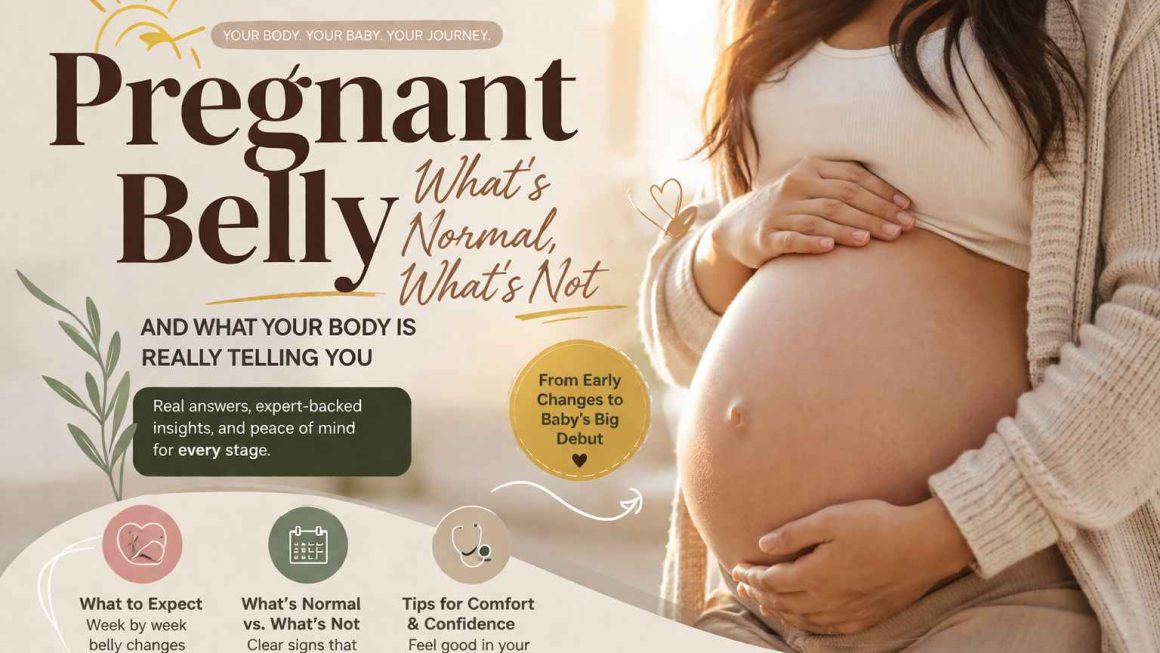
There’s something quietly powerful about watching a pregnant belly grow. It’s not just a physical change, it’s a visible story unfolding day by day. For many women, that gentle curve becomes both a source of excitement and a swirl of questions. Is it growing too fast? Too slow? Why does it look different from others?
A pregnant belly doesn’t follow a single script. It evolves based on your body, your baby, and a complex mix of biological factors. Understanding what’s happening beneath the surface helps replace doubt with confidence.
Pregnant Belly Growth Stages and What to Expect
A pregnant belly doesn’t “pop” overnight. Early on, especially in the first trimester, most of the changes happen internally. The uterus begins expanding, but it’s still tucked low in the pelvis. That’s why many women don’t show much at first, even though significant development is already underway.
As the second trimester rolls in, things become more noticeable. The uterus rises above the pelvic bone, and the belly begins to round out. This stage often brings that classic pregnancy silhouette people recognize. By the third trimester, growth accelerates, and the belly becomes more prominent as the baby gains weight and prepares for birth.
Still, no two pregnant bellies look the same. Some appear higher, others lower. Some are wide, others more compact. These variations often come down to muscle tone, body shape, and even the baby’s position.
If you’re noticing subtle early changes and wondering whether they’re meaningful, it helps to understand the early body signals. A deeper look at early pregnancy symptoms you shouldn’t ignore can clarify what’s happening before the belly becomes obvious.
What Influences the Shape and Size of a Pregnant Belly
The size of a pregnant belly often sparks unnecessary comparison. It’s easy to assume bigger means healthier or smaller means something’s wrong. In reality, belly size alone isn’t a reliable indicator of fetal development.
Several factors shape how your pregnant belly looks. Your pre-pregnancy body composition plays a role. Women with stronger abdominal muscles may carry differently than those with more relaxed muscles. Height matters too, a longer torso can “spread out” the pregnancy, making the belly appear smaller.
Then there’s the baby’s position. A baby lying horizontally can make the belly look wider, while a head-down position might create a more elongated appearance. Amniotic fluid levels and whether it’s your first pregnancy or not also influence how the belly presents.
As the weeks progress, the changes become more defined. Around the second month, internal shifts are already significant even if the belly isn’t dramatically visible. You can explore these subtle transitions further in this detailed guide on what happens at 8 weeks pregnant.
When a Pregnant Belly Signals Something Important
Most of the time, changes in a pregnant belly are completely normal. However, there are moments when your body may be signaling that something needs attention.
A belly that suddenly stops growing or grows unusually fast could warrant a checkup. Persistent pain, extreme tightness, or unusual asymmetry might also be worth discussing with a healthcare provider. It’s not about panic, it’s about staying informed and proactive.
Early pregnancy can be especially confusing because many signs are subtle and easy to dismiss. That’s why understanding foundational changes matters. Even at just a few weeks in, your body is already adapting in ways you may not fully see yet. A closer look at 4 weeks pregnant symptoms and early changes can help you connect the dots between what you feel and what’s happening internally.
Emotional Connection to Your Pregnant Belly
Beyond biology, a pregnant belly carries emotional weight. For some, it’s a symbol of joy and anticipation. For others, it can bring moments of vulnerability, especially when expectations don’t match reality.
Social media often paints a polished version of pregnancy, smooth curves, perfect timing, and glowing skin. Real life is messier and far more diverse. Your belly may not follow the “expected” timeline, and that’s okay.
Building a healthy mindset around your body during pregnancy matters just as much as physical health. Confidence grows when you understand that variation is not a flaw, it’s the norm.
For those still in the planning stage, understanding how timing and preparation affect pregnancy can make the journey smoother. This practical resource on the best time to get pregnant offers valuable insight grounded in science.
And if you’re actively preparing for pregnancy, focusing on foundational health and realistic expectations can make a real difference. A thoughtful read on what truly matters when trying to get pregnant helps align your approach with what actually works.
FAQ Pregnant Belly Changes
- When does a pregnant belly start to show?
Most women begin to notice a visible pregnant belly between 12 to 16 weeks, although it varies widely. First-time mothers may show later because the abdominal muscles are tighter, while those who’ve been pregnant before might show earlier. Body type, posture, and even bloating can influence when the belly becomes noticeable. It’s important to remember that early pregnancy changes are often internal, so lack of a visible bump doesn’t mean the pregnancy isn’t progressing normally. - Why is my pregnant belly smaller or bigger than others’?
Pregnant belly size differs due to several natural factors, including genetics, body composition, muscle tone, and the baby’s position. A smaller belly doesn’t necessarily mean the baby is underdeveloped, just as a larger belly doesn’t always indicate a bigger baby. Healthcare providers typically measure fundal height and use ultrasounds for accurate assessments. Comparing belly size with others can be misleading and often causes unnecessary worry. - Can the shape of a pregnant belly predict the baby’s gender?
The idea that belly shape predicts gender is a common myth but lacks scientific support. Whether the belly appears high, low, wide, or pointed is influenced by muscle structure, uterine position, and how the baby is lying inside the womb. Medical methods such as ultrasound provide reliable information about the baby’s sex, while belly shape remains a natural variation with no diagnostic value.
A pregnant belly is more than a physical transformation; it’s a living reflection of growth, adaptation, and resilience. It doesn’t need to match anyone else’s timeline or shape to be valid.
Trust your body. Stay informed. And when something feels off, don’t hesitate to seek clarity. Most of all, allow yourself to experience the journey without comparison. Each curve, each change, carries its own meaning.