
Reaching 17 weeks pregnant often feels like stepping into a more confident phase of pregnancy. The early uncertainty begins to fade, your energy may be returning, and your body starts showing clearer signs of the life growing inside. It’s a stage where subtle changes carry meaningful signals, both physically and emotionally, and understanding them can make all the difference.
What Happens at 17 Weeks Pregnant: Baby Development and Body Changes
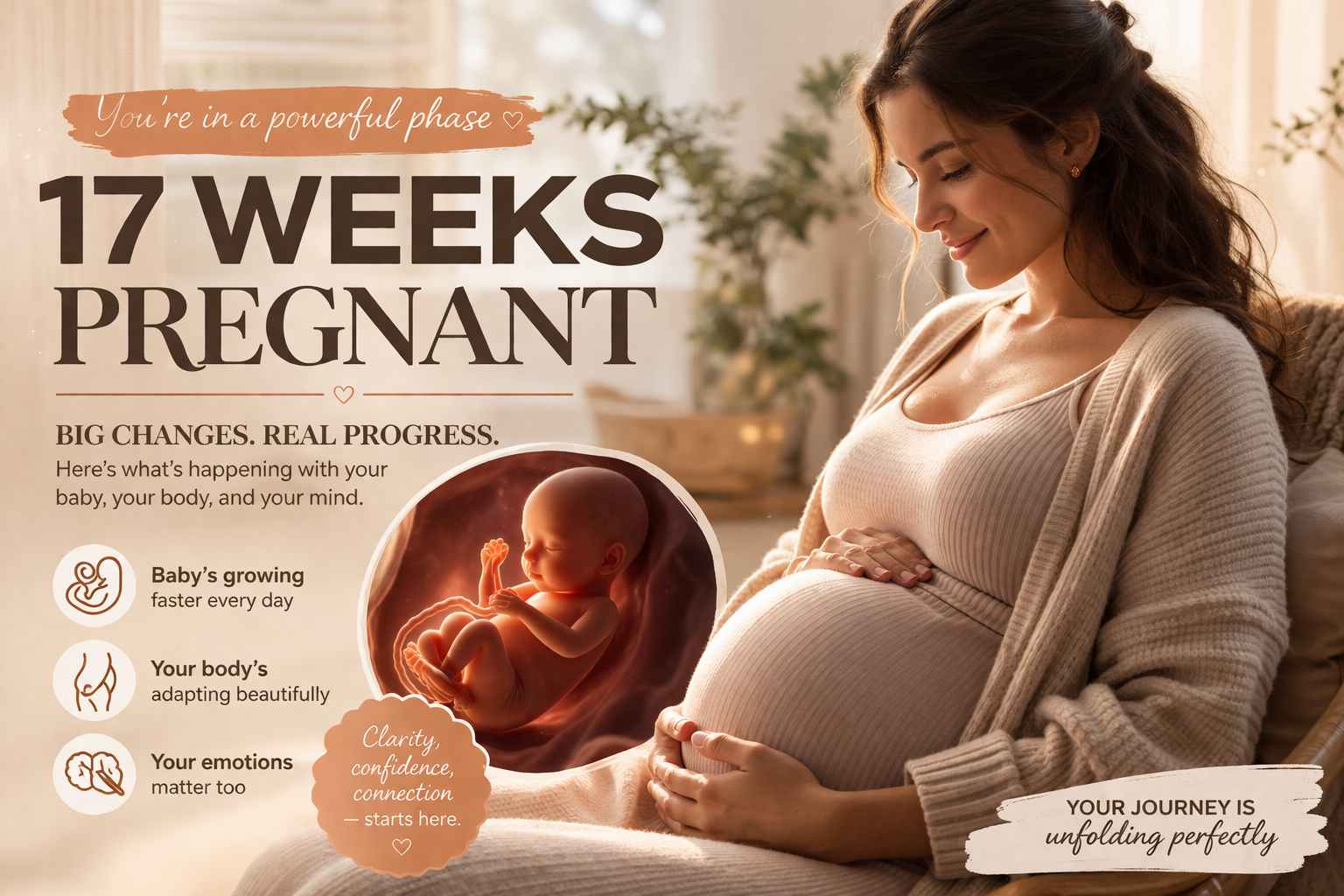
At 17 weeks pregnant, your baby is growing rapidly, now roughly the size of a pomegranate. The body is becoming more proportionate, and fat layers are starting to form under the skin, which will help regulate temperature after birth. The skeletal system continues to harden, and the umbilical cord becomes stronger and thicker, ensuring better nutrient delivery.
For you, the changes are just as significant. The uterus expands upward, moving further out of the pelvis, making your belly more noticeable. This is often the stage when people begin to comment on your pregnancy.
If you’re curious about how your shape compares to others, understanding a normal pregnant belly progression can help you stay grounded and avoid unnecessary worry.
Hormonal shifts continue, but they tend to stabilize compared to earlier weeks. Many women report improved mood and reduced nausea, although new symptoms may appear, such as mild back pain or increased appetite.
17 Weeks Pregnant Symptoms You Might Notice
At this stage, symptoms feel less overwhelming but more varied. Your body is adjusting, not just reacting. You might notice a growing appetite as your metabolism ramps up to support your baby’s development. It’s common to feel hungrier than usual, and that’s your body asking for more fuel, not signaling overindulgence.
Some women experience round ligament pain, a sharp or pulling sensation in the lower abdomen, especially when moving quickly. It can feel alarming, but it’s typically harmless and linked to the stretching of supporting ligaments.
Skin changes also begin to stand out more. A dark line down your abdomen, known as the linea nigra, may appear. Increased blood flow can give your skin a noticeable glow, while others might deal with pigmentation changes.
If you’re reflecting on earlier pregnancy signs, revisiting early pregnancy symptoms your body shouldn’t ignore can provide useful context and reassurance.
Emotional Shifts and Mental Clarity in Week 17
Emotionally, this phase often brings a sense of balance. The initial anxiety tends to ease, replaced by a more grounded awareness of your pregnancy. You may find yourself thinking more about the future, preparing mentally for parenthood, or even forming a stronger emotional connection with your baby.
However, not every day feels stable. Hormones still influence mood, and external stressors can amplify emotional responses. What matters is recognizing that these fluctuations are normal. Staying connected to supportive environments can help maintain emotional well-being.
Looking back at earlier milestones like what happens at 8 weeks pregnant, often highlights how far you’ve come, both physically and mentally.
Nutrition and Lifestyle: What Truly Matters Now
By 17 weeks pregnant, nutrition becomes less about managing nausea and more about optimizing growth. Your baby’s development depends heavily on consistent intake of key nutrients such as protein, calcium, iron, and omega-3 fatty acids.
Balanced meals matter more than ever. Instead of focusing on eating more, focus on eating smarter. Whole foods, lean proteins, leafy greens, and healthy fats should form the foundation of your diet.
Hydration is equally critical. Increased blood volume requires adequate fluid intake to support circulation and prevent common issues like headaches or dizziness.
If you’re thinking long-term, understanding what truly matters when trying to get pregnant can give deeper insight into maintaining reproductive health.
Timing and planning also play a role, especially when considering future pregnancies, and learning about the best time to conceive based on science can help you make informed decisions.
Subtle Warning Signs You Shouldn’t Ignore
While most changes at 17 weeks are normal, certain symptoms deserve attention. Persistent abdominal pain, unusual discharge, or severe headaches shouldn’t be dismissed. Pregnancy is dynamic, and your awareness plays a key role in identifying when something feels off.
Trusting your instincts matters. If something doesn’t feel right, it’s worth discussing with a healthcare provider. Early attention often prevents complications and provides peace of mind.
At the same time, avoid overanalyzing every sensation. The body is adapting in complex ways, and not every new feeling signals a problem. The balance lies in staying informed without becoming overwhelmed.
FAQ 17 Weeks Pregnant
- Is it normal not to feel the baby move at 17 weeks pregnant?
Yes, it is completely normal not to feel consistent fetal movement at 17 weeks. While some women may begin to notice light flutters, many others won’t feel anything yet. Factors such as placenta position and body sensitivity affect this timing. Most consistent movements are typically felt between 18 and 22 weeks, so there is no need to feel concerned at this stage. - How big should my belly be at 17 weeks pregnant?
There is no standard belly size at 17 weeks pregnant because every pregnancy is unique. Some women show earlier while others develop a noticeable bump later. Muscle tone, body type, and previous pregnancies all influence this. What matters most is steady growth monitored during prenatal visits, not comparison with others. - What should I be eating at 17 weeks pregnant for healthy development?
At this stage, nutrition should focus on quality rather than quantity. Iron supports blood production, calcium strengthens bones, and protein aids tissue growth. Omega-3 fatty acids contribute to brain development. A balanced diet with whole foods, vegetables, fruits, and healthy fats ensures both you and your baby get essential nutrients.
Seventeen weeks pregnant marks a shift toward greater awareness and connection. Your body feels more stable, your baby’s growth becomes more real, and each change starts to make sense in a deeper way. This phase isn’t just about tracking time, it’s about recognizing progress and trusting the process as it unfolds.